Call Us:
 Mail Us:
Open University Education in Turkey (2026): A Complete Guide to AÖF, AUZEF & ATA-AÖF
 By Ammar
- 4 min read
Open university education in Turkey has become a popular choice for students who can't commit to the schedule of a traditional in-person degree — whether they'…
Open university education in Turkey has become a popular choice for students who can't commit to the schedule of a traditional in-person degree — whether they're working full-time, raising a family, or living far from a university city. The system offers fully recognised associate's and bachelor's degrees, accredited by Turkey's Council of Higher Education (YÖK), and is one of the most affordable, high-quality distance-learning options in the wider region. This 2026 guide covers the main open universities in Turkey, admission requirements, and how to register step by step.
What exactly is open university education?
Open education (Açıköğretim) is a distance-learning model where you study from home using a mix of textbooks, recorded video lessons, and online materials, then sit your exams in person at designated centres inside Turkey or in select international locations. There are no mandatory lectures and no attendance requirements — perfect for working students or anyone outside a university city.
The main open universities in Turkey (2026)
1. Anadolu University — AÖF (Anadolu Açıköğretim)
The oldest and largest open university in Turkey. Based in Eskişehir, founded in 1958, AÖF offers more than 50 programmes across Economics, Business, Humanities, Law, and Communication. Exam-based system, with degrees recognised inside and outside Turkey.
2. Istanbul University — AUZEF
Run by Istanbul University, AUZEF offers distance-learning bachelor's programmes in a model similar to AÖF, but with a more academic, university-like character. It is especially well known for its programmes in Sociology, History, Business Administration, Translation, and Public Health.
3. Ataturk University — ATA-AÖF
Operated by Ataturk University in Erzurum, ATA-AÖF runs programmes in Accounting, Business Administration, Health Services, Nursing and Media. ATA-AÖF has been steadily attracting more Arab students thanks to its easier registration and flexible fee structure.
Admission requirements
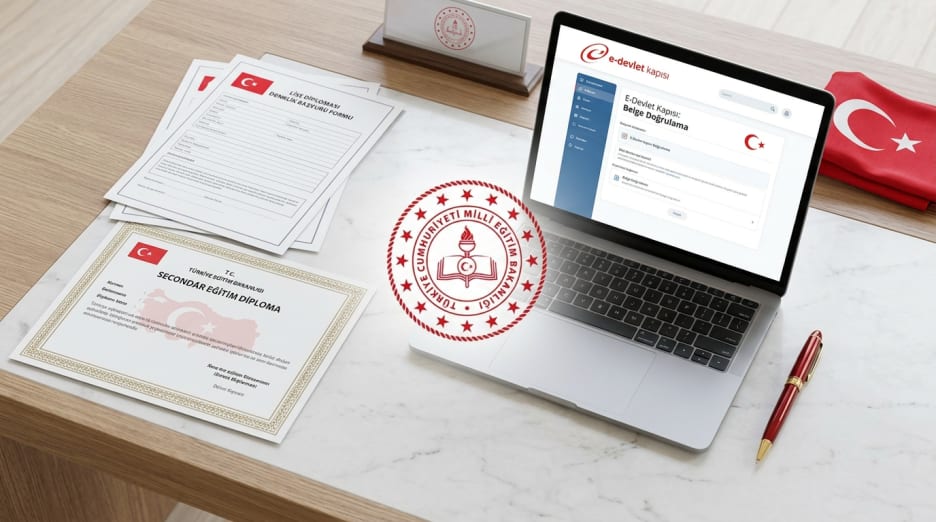
- A high-school diploma (or equivalent) recognised by the Turkish Ministry of Education through Lise Denkliği (high-school equivalency).
- A foreigner ID number (Yabancı Kimlik No), or a Turkish ID if you're a resident.
- Some programmes (notably Law and certain Business tracks at AÖF) require an entrance exam.
- Payment of the annual tuition fee set by the university.
Documents you'll need
- Copy of your passport, or Turkish ID/residence permit.
- High-school diploma certified by the Ministry of Education.
- High-school equivalency certificate (Denklik).
- Recent passport-style photos.
- Tuition payment receipt.
How to register via e-Devlet (step by step)
- Log into e-Devlet (turkiye.gov.tr) using your personal credentials.
- Search for "Açıköğretim Sınav Başvurusu" or "AÖF / AUZEF Kayıt".
- Pick your university (Anadolu / Istanbul / Atatürk) and your programme of choice.
- Fill in the form and upload supporting documents (PDF or JPG).
- Pay the tuition fee online by credit card or through approved banks.
- Save your student number and password for the e-learning portal — it's where you'll access course materials and exam schedules.
Tuition fees in 2026
Fees vary by university, programme and number of credits, but for international students they typically range from 1,500 to 4,500 Turkish lira per year at AÖF and AUZEF. This low cost is one of the biggest reasons students pick open education over traditional in-person enrolment.
Exam system
Open-education students sit three exam rounds per year: a midterm (Ara sınav), a final (Final), and a make-up exam (Bütünleme) for anyone who fails the final. Exams are written in person at designated centres inside Turkey, and at select centres abroad — Germany, France, Saudi Arabia, the UAE, Qatar, and others.
Online study platforms
Each open university maintains a digital study platform with:
- Free downloadable e-books in PDF format.
- YouTube video lessons taught by university faculty.
- Practice tests and archives of past-year exam questions.
- A mobile app so you can study on the go.
Most popular programmes
- Business Administration (İşletme).
- Accounting and Taxation.
- Media and Communication.
- Sociology.
- History.
- Public Administration.
- Translation.
- Nursing and Public Health (limited capacity, special prerequisites).
Is an open-education degree internationally recognised?
Yes — Turkish open-education degrees are accredited by the Council of Higher Education (YÖK) and recognised by ministries of higher education in most Arab countries (provided the document is attested at the Turkish consulate). Many graduates use them to pursue a master's degree inside or outside Turkey.
Tips before you register
- Make sure your chosen programme is actually available via open education — some fields (Medicine, Engineering) aren't.
- Register during the official window (usually August–September). Deadlines are rarely extended.
- Stay disciplined: watch the recorded lessons, take the practice tests, and don't leave studying to the last week before exams.
- Join Arabic student communities on Facebook and Telegram — they share summaries, study notes and exam tips.
The bottom line
Open university education in Turkey is a genuine opportunity to earn a recognised degree without committing to full-time in-person attendance. With low tuition, flexible study, and well-developed online platforms, almost anyone with the discipline to study at home can complete a bachelor's degree this way. Get your high-school equivalency sorted, pick a university that suits your programme, and register through e-Devlet within the official window — that's the playbook.